

🏘️ Freguesias, Câmaras & the Government Portugal Voted Down
🏘️ A layer of govt the Constitution designed, & that voters killed at the ballot box. And 302 small govts that came back from the dead in 2025, twelve years after they were merged away. Issue 14.

New here? We’re working travelers, visa holders or visa holders to be, in country residents, travelers headed to Portugal, or have planned moves to Portugal. We are not professors or historians — building the clearest English-language guide to helping residents, travelers, and exam takers of Portugal’s new citizenship exam (the TNIC). We do this methodically one Sunday at a time. No one left behind on this journey.
Today’s issue: the office you’ll actually walk into for a residency paper, the government layer the Constitution planned and Portugal rejected, and why your parish might not have existed twelve years ago.
If you’re planning a trip to Portugal, planning on residing there in your future, looking for ways to integrate into Portuguese society or preparing to become Portuguese — as I am — subscribe free and I’ll walk through lessons that are helpful in all things Portuguese and help prepare you for the TNIC exam,, week by week.
If you are here just to Practice It, there are three quick civics exam questions on this issue at the bottom of this issue. Scroll down.
The Short Version
Issue 10 covered the four organs of sovereignty — the President, the Assembly, the Government, the Courts. That’s the government you read about. It is not the government you deal with.
The office that issues your residency attestation, sets your property tax rate, and paves the street outside your building is a different, smaller layer entirely — one the Constitution actually designs in three tiers, though Portugal has only ever built two of them. The third tier isn’t missing by accident. Portuguese voters rejected it directly, in a national referendum, and nobody has tried to revive it since.
That is the frame for this issue: local government in Portugal is not one thing. It’s a freguesia (parish) nested inside a município (municipality), a constitutional plan for a third administrative layer that never happened, and a map that the state has redrawn twice in the last thirteen years — once to shrink it, once to partly undo the shrinking.
What local government actually is
Article 236 of the Constitution names three categories of autarquia local (local authority): freguesias, municípios, and regiões administrativas (administrative regions). Only the first two exist in practice — more on the third below.
Each of the two real tiers has the same basic shape: one body that decides, one body that executes. Lei n.º 75/2013, the law that sets the legal regime for local authorities, spells this out directly:
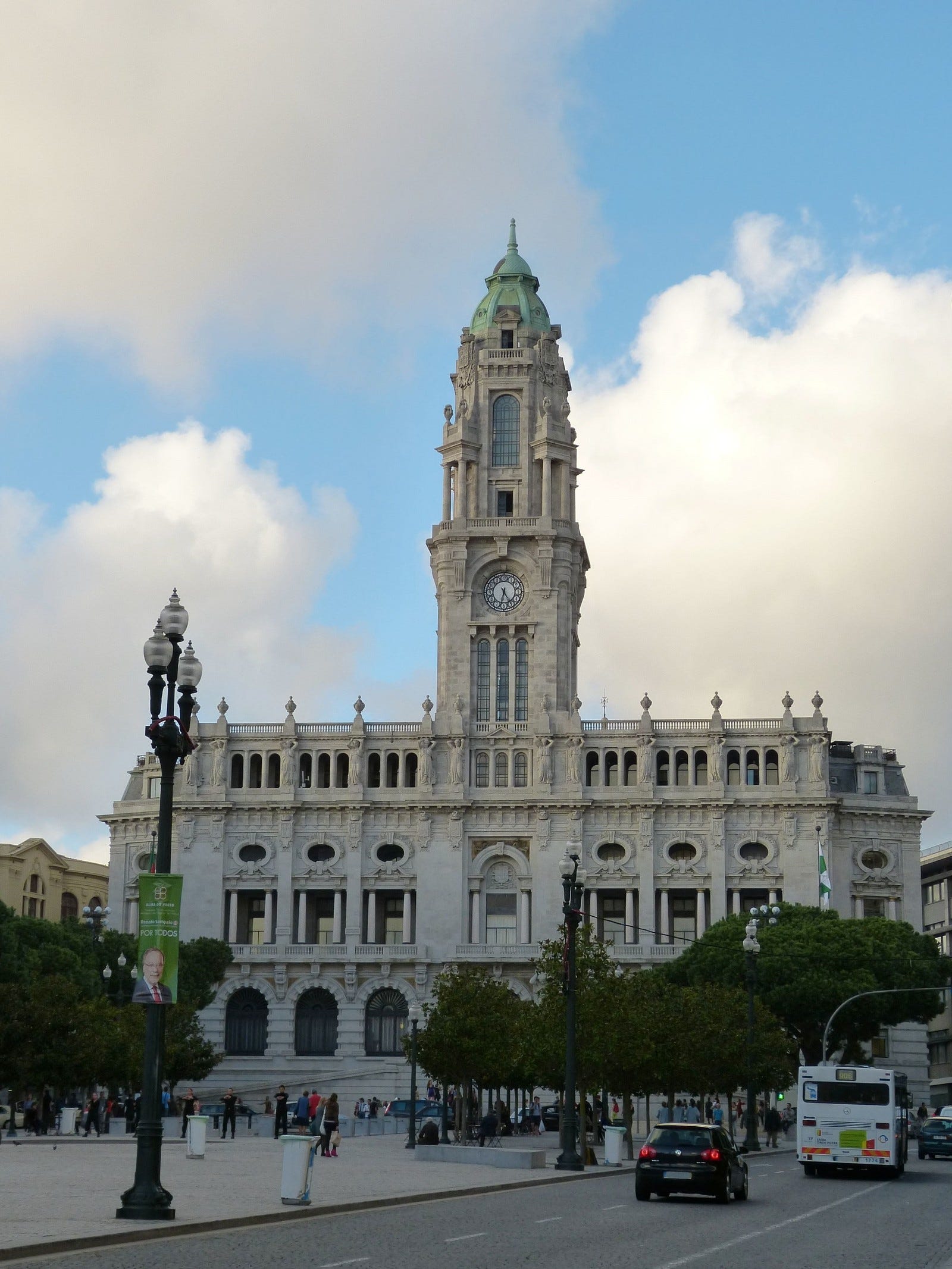
• Município (municipality) — 308 of them nationwide. The assembleia municipal is the deliberative body (it votes on budgets and by-laws); the câmara municipal, headed by the presidente da câmara (mayor), is the executive body that actually runs things day to day.
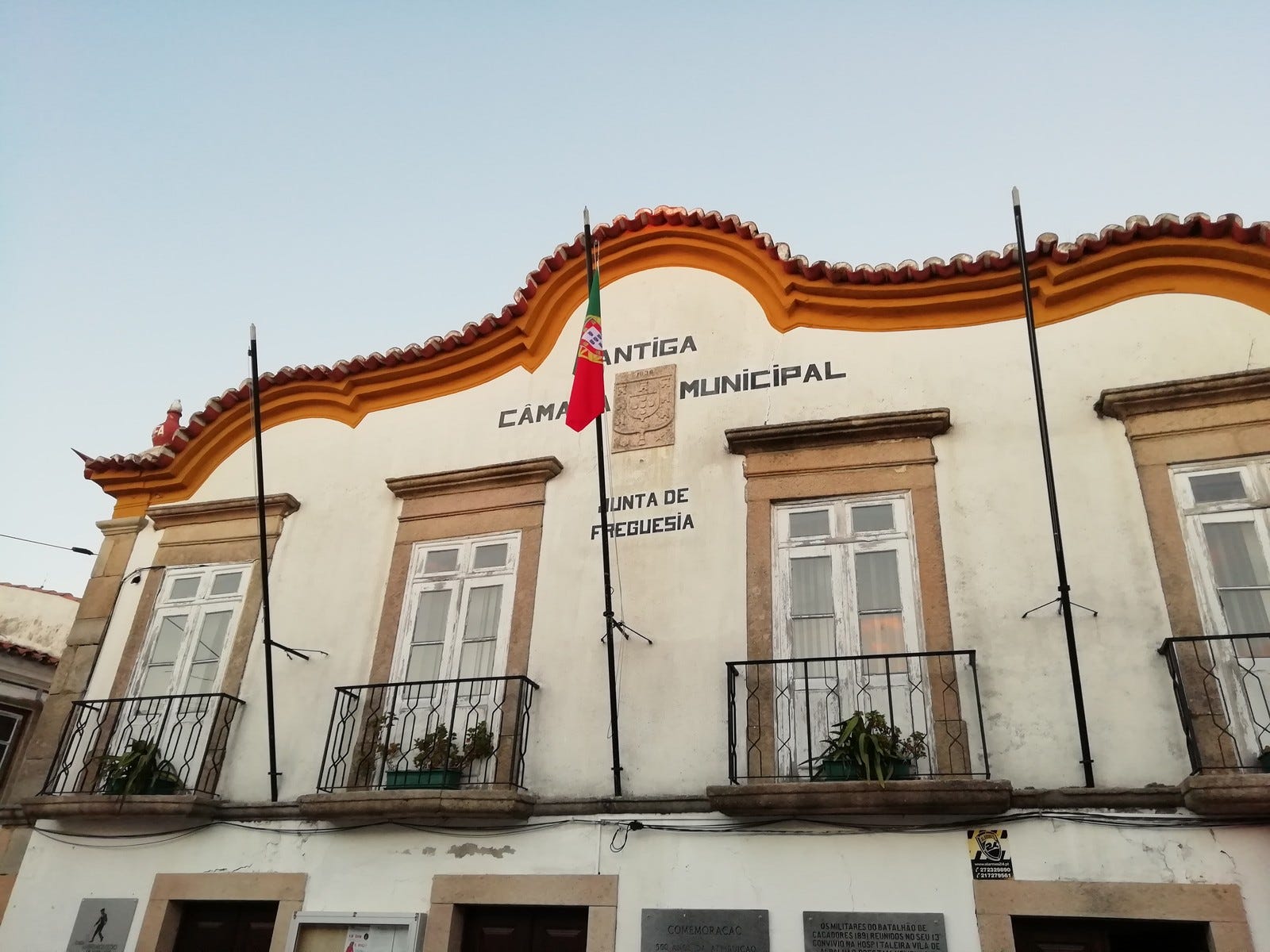
• Freguesia (parish) — the smallest administrative unit, nested inside a município. The assembleia de freguesia is the deliberative body; the junta de freguesia, headed by the presidente da junta, is the executive body.
The freguesia is the one you’ll actually stand in front of a counter at. Under Articles 16 and 18 of Lei n.º 75/2013, a junta de freguesia has the power to issue an atestado — an official attestation, including the residency attestation (atestado de residência) that proves where you live for everything from school enrollment to opening a bank account. For a foreign resident, the junta will ask to see a valid residence title before issuing one — a passport with an entry stamp isn’t enough.
The referendum that killed a third of your local government
Here’s the part the four-organs-of-sovereignty version of Portuguese government skips entirely: the Constitution’s plan for local government has a third tier, regiões administrativas (administrative regions), sitting between the município and the national government. It has never existed for a single day.
On 8 November 1998, Portugal held a national referendum asking two questions at once: whether to approve administrative regions in general, and whether to approve the specific region a voter’s own area would fall into. “Não” won by an absolute majority nationwide. No government since has put the question back to voters, and no administrative region has ever been created. The third tier the Constitution designed is, twenty-eight years later, still just a paragraph in Article 236 with nothing built underneath it.
Meanwhile, the two tiers that do exist haven’t stayed still either. In 2013, under the PSD/CDS government and following recommendations from the earlier troika-era program, the state merged more than 1,100 freguesias into larger territorial unions — a reform informally known as the “Lei Relvas,” after the minister who carried it, Miguel Relvas. Twelve years later, on 17 January 2025, Parliament reversed part of that: it approved restoring 302 of the merged freguesias as separate parishes again, effective once their newly elected bodies took office after the 12 October 2025 local elections. The law that did it, Lei n.º 25-A/2025, states its own purpose plainly: it exists to “restore parishes aggregated by Law No. 11-A/2013.”
Twice in thirteen years, the government has redrawn which local governments exist at all — first shrinking the map, then partly redrawing it back. Whatever freguesia your address falls into today might not have existed as its own unit in 2020.
Quiet residential setting typical of a small Portuguese town or villageWhy it matters
The government you deal with for a property tax bill isn’t the one you’d guess from the name on it. Under Article 112 of the Código do IMI, the IMI (Imposto Municipal sobre Imóveis, the municipal property tax) has its rate set through assembleia municipal deliberation, within a national range (0.3%-0.45% for urban properties) — a decision made locally, by the município — but the tax itself is collected nationally, by the Autoridade Tributária e Aduaneira, the same tax authority that handles income tax. Local decision, national collection: a small example of how Portugal’s layers of government share the same piece of paper without either one being the whole story.
That layering is the actual civic lesson here, not a technicality. Article 235’s promise of local democratic governance only means something if you know which of the three constitutionally-named tiers is real. Two are. One is a referendum result, not an oversight.
Getting value from this? This is exactly how we cover all five exam themes — plain English, real sources, no fluff. It’s free. I’d love to have you along this journey with us.
Things to remember
· The Constitution names three tiers of local government — freguesias, municípios, and regiões administrativas — but only the first two actually exist.
· Regiões administrativas were rejected in a national referendum on 8 November 1998; “Não” won by an absolute majority, and no government has tried again since.
· A município’s deliberative body is the assembleia municipal; its executive body is the câmara municipal, led by the presidente da câmara. A freguesia mirrors this: assembleia de freguesia (deliberative), junta de freguesia (executive).
· A junta de freguesia can issue an atestado de residência (residency attestation) — for a foreign resident, a valid residence title is required, not just a passport entry stamp.
· Portugal merged over 1,100 freguesias into larger units in 2013 (the “Lei Relvas” reform); in 2025, Parliament restored 302 of them as separate parishes again, effective after the 12 October 2025 local elections.
Practice it
Three quick questions below, useful whether you’re prepping for the TNIC exam or want to be even more informed traveling to or residing in Portugal. The full answer key is on the companion subscriber page; subscribe (it’s free) at the bottom of this post to see how you did.
1. Which of these is the deliberative (voting) body of a Portuguese município (municipality)?
(a) Câmara municipal
(b) Assembleia municipal
(a) Junta de freguesia
2. Portugal’s Constitution names three types of local government: freguesias, municípios, and regiões administrativas. How many of the three actually exist today?
(a) One
(b) Two
(c) All three
3. What happened to Portugal’s freguesias (parishes) between 2013 and 2025?
(a) Over 1,100 were merged into larger units in 2013, then about 300 were restored as separate parishes again in 2025
(b) The number of freguesias has stayed exactly the same since 1976
(c) All freguesias were abolished in 2013 and replaced entirely by municípios
How do you think you did without going back up into this issue to find the answers? Want the answer key for all the questions in all of our issues?
Click here — it’s free.
The Portugal Civics Issue is a free weekly guide to Portugal’s TNIC citizenship exam. Next Sunday: Issue 15 — The Legal Paths to Citizenship: D7, D2, D3, Marriage, and Descent.
If this knowledge is helpful now and can be in your future, click here to subscribe.
The work continues.
— Chris, Aspiring Lusitano
SOURCES & VERIFICATION
CONSTITUTIONAL STRUCTURE
● Article 236, three categories of autarquia local (freguesias, municípios, regiões administrativas) — Assembleia da República, official consolidated Constitution text. parlamento.pt
● Lei n.º 75/2013, de 12 de setembro — legal regime of local authorities; Article 5 (organs), Article 6 (deliberative vs. executive), Articles 16 and 18 (junta de freguesia’s attestation powers) — Diário da República / pgdlisboa.pt. pgdlisboa.pt
● Junta de freguesia’s residency-attestation authority applied to a foreign citizen, valid residence title required — Comissão de Coordenação e Desenvolvimento Regional do Norte (CCDR-N), official legal opinion. ccdr-n.pt
● Current counts — 308 municípios, 3,092 freguesias — Mais Transparência (official government transparency portal). [VERIFY: this page is dated to 2021 and predates the 2025 freguesia restoration below; the true current freguesia total is higher than 3,092 but not confirmed against a primary source this session.] transparencia.gov.pt
THE 1998 REFERENDUM
● Referendum date (8 November 1998) and the two-question wording — Comissão Nacional de Eleições (CNE), the official electoral commission. cne.pt
● “Não” winning by absolute majority — RTP Arquivos, Portugal’s public broadcaster’s official archive. [VERIFY: exact percentage split not confirmed against an acceptable source this session — only the fact that “No” won by an absolute majority is confirmed.] arquivos.rtp.pt
THE 2013 MERGER AND 2025 RESTORATION
● 2013 freguesia merger (“Lei Relvas,” informally named for then-minister Miguel Relvas), over 1,100 freguesias aggregated, and the 2025 restoration of 302 freguesias approved 17 January 2025 — ECO (Económico). eco.sapo.pt
● Lei n.º 25-A/2025, de 13 de março, full text — restores parishes aggregated by Lei n.º 11-A/2013, effective upon installation of newly elected parish bodies from the 2025 local elections — Diário da República. diariodarepublica.pt
● 2025 local elections date (12 October 2025) and offices elected (câmara municipal, assembleia municipal, assembleia de freguesia, junta de freguesia) — Comissão Nacional de Eleições (CNE). cne.pt
IMI (PROPERTY TAX)
● IMI collected by the Autoridade Tributária e Aduaneira (national Tax and Customs Authority) — gov.pt official service page. gov.pt
● Assembleia municipal’s authority over the IMI rate, within a 0.3%-0.45% national range for urban properties (Article 112, Código do IMI) — Autoridade Tributária e Aduaneira’s own official tax code portal. portaldasfinancas.gov.pt
IMAGES
• Image 1 (câmara municipal): “Town Hall Porto” — Câmara Municipal do Porto. Photographer: falco. Pixabay Content License (free use, no attribution legally required). Source: https://pixabay.com/photos/town-hall-porto-portugal-city-229366/ — Verified 2026-08-07. Stored as camara-municipal-porto-original.jpg / -hero-1600w.jpg / -embed-1200w.jpg / -CREDITS.txt.
• Image 2 (junta-freguesia-alpalhao)
SOURCE: https://commons.wikimedia.org/wiki/File:Junta_de_Freguesia_de_Alpalh%C3%A3o.jpg
• DIRECT FILE (full resolution, 4160x3120): https://upload.wikimedia.org/wikipedia/commons/5/5e/Junta_de_Freguesia_de_Alpalh%C3%A3o.jpg
• PHOTOGRAPHER / UPLOADER: Rui Canatário (own work)
• UPLOAD DATE: 30 November 2021
• LICENSE: Creative Commons Attribution-ShareAlike 4.0 International (CC BY-SA 4.0)
• ATTRIBUTION REQUIRED: YES — unlike the Pixabay-sourced images in this issue, this license requires attribution and share-alike. Do not use without crediting.
• REQUIRED CREDIT LINE (per the file’s own attribution generator): Rui Canatário, CC BY-SA 4.0 <https://creativecommons.org/licenses/by-sa/4.0>, via Wikimedia Commons
• LICENSE TEXT: https://creativecommons.org/licenses/by-sa/4.0/
• WHAT IT SHOWS: The former (antiga) Câmara Municipal building in Alpalhão, Nisa municipality, Alentejo — now serving as the Junta de Freguesia (parish council office). The facade is painted with both “ANTIGA CÂMARA MUNICIPAL” and “JUNTA DE FREGUESIA,” with the Portuguese flag flying in front.
• Image 3 (general town/village scene): “Car Street Village Portugal” — a narrow Portuguese village street. Photographer: diego_torres. Pixabay Content License (free use, no attribution legally required). Source: https://pixabay.com/photos/car-street-village-portugal-2340078/ — Verified 2026-08-07. Stored as village-street-original.jpg / -hero-1600w.jpg / -embed-1200w.jpg / -CREDITS.txt.
END