

🎵 Fado, Festivals & the Portuguese Calendar
🎵 A love song nobody can agree on the origin. A saint’s wedding registry the dictatorship’s fall shut down for 30 years & a law that deleted 4 national holidays, then quietly undeleted them. Iss 13

New here? We’re working travelers, not professors — building the clearest English-language guide to Portugal’s new citizenship exam (the TNIC), one Sunday at a time. Today: the song Portugal exported to UNESCO, the June it lights bonfires and swings plastic hammers, and the arithmetic of a public holiday.
If you’re preparing to become Portuguese — as I am — subscribe free and I’ll walk the whole TNIC exam with you, week by week.
If you are here just to Practice It, there are three quick civics exam questions on this issue at the bottom.
The Short Version
Nobody can tell you exactly when fado started, and the people who study it for a living say so openly. What you can say for certain: by the 1800s it was playing in Lisbon’s poorer taverns and back streets, sung by people the respectable city looked down on, and by 1927 — before the dictatorship even had its permanent constitution — the state had already decided the song needed a license and a censor.
That is the pattern this issue runs on. Twice in modern Portuguese history, the state reached into something ordinary — a song, a calendar — and controlled it. Fado got a censor. The public holiday calendar got cut from thirteen days to nine. Both were eventually restored to something closer to what came before, and both restorations are recent enough that people who lived through them are still working.
In between sits June: the month Lisbon marries strangers for money it doesn’t have and Porto hits people on the head with a plastic hammer that used to be illegal.
A song nobody can agree on the origin of
Ask where fado came from and you get several answers, and the honest one is that scholars don’t fully know. Infopédia, the Portuguese-language reference encyclopedia, lists competing theories: descent from melancholic Arabic-influenced song traditions, a debt to the lundum — music Brazilian sailors and enslaved people brought into Lisbon’s port in the early 19th century — and echoes of medieval troubadour ballads. UNESCO’s own inscription decision splits the difference, describing fado as a blend of “Afro-Brazilian traditions, local song and dance genres, rural musical customs, and nineteenth-century urban patterns.”
What is not in dispute: the name comes from the Latin fatum, fate, and the Museu do Fado — Lisbon’s own fado museum — places its emergence in 1800s Lisbon among people the city didn’t respect: sailors, coachmen, and sex workers, performed in taverns, gardens, and the street before it ever reached a stage.
The genre’s first mythologized star, Maria Severa (1820–1846), died at 26 and became the template for the doomed, tragic fadista that fado still trades on. A century later, Amália Rodrigues (1920–1999) took the same song global and is still the name most people mean when they say “fado singer.”
The emotional register the lyrics run on has its own name: saudade, a longing for someone or something absent: a person, a place, a version of a life that Portuguese speakers will tell you doesn’t translate cleanly into any other language. Without it, fado’s lyrics of loss and fate don’t make sense.
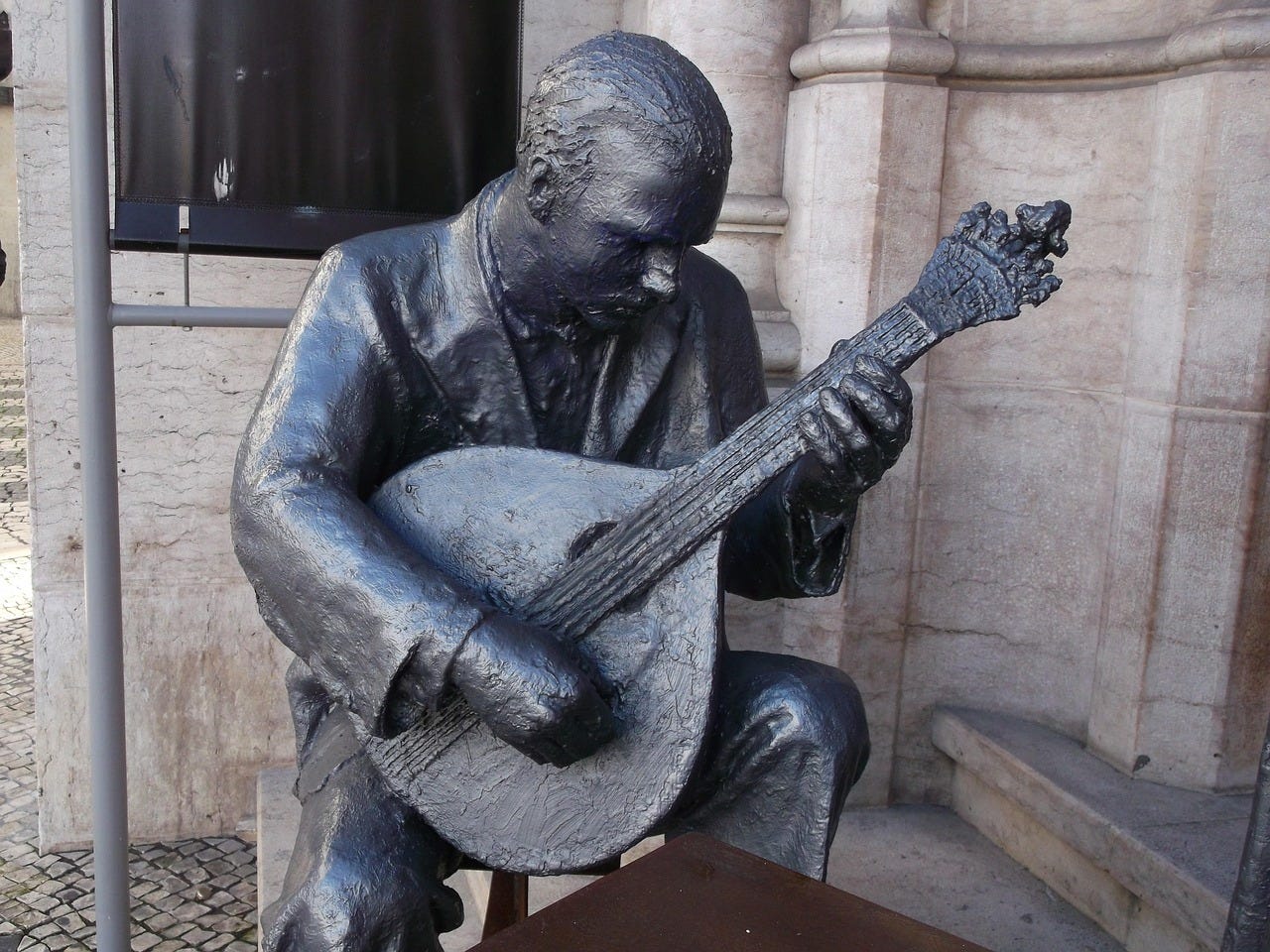
The state licensed a love song before it had a constitution
Here is the part the popular story skips: fado wasn’t controlled because Salazar personally disliked it. It was controlled from the start of the military dictatorship that preceded him. According to the Museu do Fado’s own institutional history, a 1927 decree — issued the year after the 1926 coup, six years before the Estado Novo’s constitution existed — required government pre-approval of every song lyric and a license for every performer, a fadista.
That licensing regime hardened under the Estado Novo (1933–1974) into what’s popularly remembered as the “Three Fs” — Fado, Fátima, Futebol — song, faith, and football, tolerated and even promoted as safe, apolitical outlets while anything that touched politics or poverty in a lyric got cut. The regime didn’t invent any of the three. It just decided which versions of each were allowed to exist in public.
Fado outlived the censor. UNESCO inscribed Fado, urban popular song of Portugal onto the Representative List of the Intangible Cultural Heritage of Humanity — the first Portuguese artistic expression to receive the designation.
Two saints, two cities, and a wedding registry that stopped for thirty years
Portugal’s June belongs to the Santos Populares the Popular Saints festival cycle — feast days that predate the republic, the dictatorship, and in the view of some historians, Christianity itself. Multiple Portuguese scholars as Observador’s history feature on the Lisbon festivals notes have argued for a pre-Christian, summer-solstice root to the June bonfire tradition, but the same piece is honest that this can’t be proven either way.
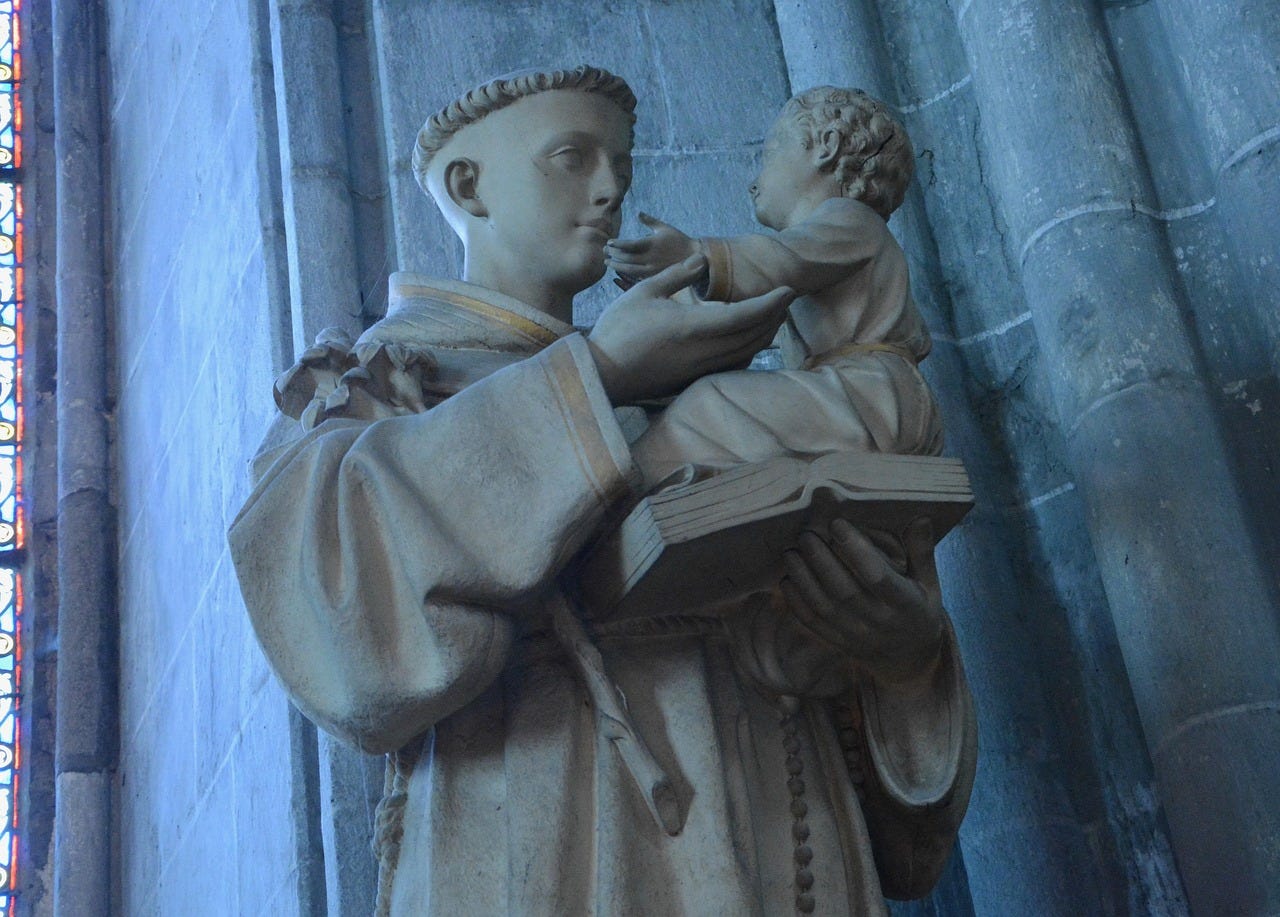
Lisbon: Santo António. António died on 13 June 1231 and became Lisbon’s patron saint; the city historically marked him twice a year, on 15 February and 12–13 June, though June is what survives as the public festival. The best-known Lisbon tradition tied to him, the Casamentos de Santo António, mass weddings held on his feast day for couples who couldn’t otherwise afford one is much younger than the saint: it began in the late 1950s, organized by historian Augusto Cortês Pinto and promoted by the newspaper Diário Popular, with the city council sponsoring the costs. It ran for sixteen editions and then simply stopped in 1974, the year of the Carnation Revolution and did not run again for thirty years.
Porto: São João. The night of 23–24 June, timed to the summer solstice, is Porto’s biggest party, marked by paper sky lanterns and the ritual of tapping strangers on the head with a plastic hammer. That hammer is not an old tradition. It was invented in 1963 by Manuel Boaventura, a Porto plastics manufacturer, as a children’s toy modeled on a bellows-shaped salt-and-pepper shaker he’d seen abroad and it replaced a genuinely old custom, the alho-porro (leek), which 19th-century Porto residents swung at each other and then hung behind the door against the evil eye.
The hammer was popular enough with university students that Porto’s own council tried to ban it in 1970. Boaventura fought the ban in court for three years; the Supreme Court of Justice ruled in his favor in 1973, and the hammer has been legal and dominant ever since. São João, for the record, is not even Porto’s official patron saint; that title belongs to Nossa Senhora da Vandoma. Porto made 24 June a municipal holiday by referendum in 1911 in an election where only literate citizens could vote.
The calendar the state edited twice
Portugal currently observes 13 mandatory national holidays (feriados obrigatórios), fixed by Article 234(1) of the Labour Code: 1 January, Good Friday, Easter Sunday, 25 April, 1 May, Corpus Christi, 10 June, 15 August, 5 October, 1 November, and 1, 8 and 25 December. That list is not permanent. Lei n.º 23/2012, de 25 de junho, an austerity-era law, deleted four of those thirteen — Corpus Christi, 5 October (Republic Day), 1 November (All Saints’ Day), and 1 December (Restoration of Independence Day) — effective 1 January 2013. For three years the mandatory calendar ran on nine days, not thirteen.
Why it matters
Fado and the June saints are the parts of “being Portuguese” that show up everywhere in daily life — and Article 78 of the Constitution makes that a state obligation, not a hobby. Article 78(1) states plainly: “Todos têm direito à fruição e criação cultural, bem como o dever de preservar, defender e valorizar o património cultural” everyone has the right to cultural enjoyment and creation, and a duty to preserve, defend, and enhance the cultural heritage.
Getting value from this? This is exactly how we cover all five exam themes — plain English, real sources, no fluff. It’s free. Subscribe, and bring a friend who’s also going through it.
Things to remember
· Fado’s exact origin is genuinely disputed among scholars — UNESCO’s own description calls it a blend of Afro-Brazilian, rural Portuguese, and 19th-century urban Lisbon influences, not a single clean birthplace.
· Fado was licensed and censored starting in 1927, under the military dictatorship that preceded the Estado Novo — not invented as control by Salazar personally, though his regime hardened it into the “Three Fs” framing.
· UNESCO inscribed Fado onto the Representative List of the Intangible Cultural Heritage of Humanity on 27 November 2011 — the first Portuguese artistic expression to receive that recognition.
· Lisbon’s Casamentos de Santo António mass weddings began in the late 1950s, stopped in 1974 with the Carnation Revolution, and didn’t run again for thirty years. Porto’s São João “martelinho” hammer is a 1963 invention that was briefly banned by the city before the Supreme Court restored it in 1973.
Practice it
Three quick questions below, useful whether you’re prepping for the TNIC or just want to test what stuck. The full answer key is on the companion subscriber page; subscribe (it’s free) at the bottom of this post to see how you did.
1. Which of the following was a tool of Estado Novo–era control over fado, rather than part of its later recognition?
(a) UNESCO’s 2011 Intangible Cultural Heritage inscription
(b) Government licensing required for fado performers (“fadistas”)
(c) Amália Rodrigues’s international touring
(d) Public heritage funding for the Museu do Fado
2. How many mandatory national holidays (feriados obrigatórios) does Portugal currently observe under Article 234 of the Labour Code?
(a) 9
(b) 11
(c) 13
(d) 15
3. Which of these four events happened most recently?
(a) The Casamentos de Santo António tradition begins in Lisbon
(b) UNESCO inscribes Fado on the Representative List
(c) Lei n.º 8/2016 restores the four suspended national holidays
(d) The Casamentos de Santo António tradition stops after the Carnation Revolution
How do you think you did without going back up into this issue to find the answers? Want the answer key for all the questions in all of our issues?
The Portugal Civics Issue is a free weekly guide to Portugal’s TNIC citizenship exam. Next Sunday: Issue 14: Freguesias, Câmaras & the Government Portugal Voted Down.
If this knowledge is helpful now and can be in your future, click here to subscribe.
The work continues.
— Chris, Aspiring Lusitano
SOURCES & VERIFICATION
FADO — ORIGINS, HISTORY, RECOGNITION
● Etymology, general definition, melancholic character — Encyclopaedia Britannica, “Fado.” britannica.com
● Competing origin theories (Arabic-influenced melancholic song, lundum/Afro-Brazilian influence via early-19th-century sailors, medieval troubadour echoes), Maria Severa (1820–1846) as the genre’s mythologized first star — Infopédia. infopedia.pt
● Fado’s emergence in 1800s Lisbon among marginalized communities, performance settings (taverns, gardens, streets), Bairro Alto’s concentration of fado houses from the 1930s — Museu do Fado (Lisbon’s municipal fado museum, EGEAC). museudofado.pt
● 1927 licensing/censorship decree, professional licensing of fadistas — Museu do Fado. museudofado.pt
● UNESCO Decision 6.COM 13.39, “Fado, urban popular song of Portugal,” inscribed 27 November 2011, official description of fado’s multicultural origins — UNESCO Intangible Cultural Heritage. ich.unesco.org
THE JUNE FESTIVALS
● Santo António’s death date (13 June 1231), twice-yearly historical observance (15 February and 12–13 June), the Casamentos de Santo António’s origin (Augusto Cortês Pinto, Diário Popular, city council sponsorship), its 16-edition run and 1974 stoppage, contested pre-Christian solstice theory (Leite de Vasconcelos, Luís Chaves) — Observador. observador.pt
● São João date (night of 23–24 June) and solstice timing, 1911 municipal-holiday referendum restricted to literate citizens, São João Baptista not being Porto’s official patron saint (Nossa Senhora da Vandoma holds that title) — Observador. observador.pt
● The martelinho’s 1963 invention by Manuel Boaventura, its replacement of the older alho-porro (leek) custom, the 1970 municipal ban and 1973 Supreme Court of Justice ruling restoring it — Público. publico.pt
THE HOLIDAY CALENDAR
● Lei n.º 23/2012, de 25 de junho — full text confirming the four holidays deleted from Article 234 of the Labour Code, effective 1 January 2013 — Diário da República / pgdlisboa.pt. pgdlisboa.pt
● Lei n.º 8/2016, de 1 de abril — full text restoring the four holidays and the current wording of Article 234(1) — Diário da República / pgdlisboa.pt. pgdlisboa.pt
CONSTITUTION
● Article 78(1), “Fruição e criação cultural,” verbatim — Assembleia da República, official consolidated Constitution text. parlamento.pt
IMAGES
1. IMAGE: fado-statue-dunyazade.jpg
DIRECT FILE: https://cdn.pixabay.com/photo/2014/03/24/20/34/statue-295690_1280.jpg
PHOTOGRAPHER / UPLOADER: dunyazade (Pixabay user)
UPLOAD DATE: 25 March 2014
LICENSE: Pixabay Content License (free for use, no attribution legally required)
ATTRIBUTION REQUIRED: No — not legally required. Crediting the photographer is a courtesy, not an obligation.
SUGGESTED CREDIT LINE: Photo: dunyazade / Pixabay
WHAT IT SHOWS: A statue of a fadista (fado singer/guitarist) playing the guitarra portuguesa, Lisbon.
2. IMAGE: santo-antonio-statue-jaclou-dl.jpg
DIRECT FILE: https://cdn.pixabay.com/photo/2017/08/30/01/15/statue-2695581_1280.jpg
PHOTOGRAPHER / UPLOADER: JACLOU-DL (Pixabay user)
UPLOAD DATE: 30 August 2017
LICENSE: Pixabay Content License (free for use, no attribution legally required)
ATTRIBUTION REQUIRED: No — not legally required under the Pixabay Content License.
SUGGESTED CREDIT LINE: Photo: JACLOU-DL / Pixabay
WHAT IT SHOWS: A stone statue of Santo António (Saint Anthony of Padua/Lisbon) holding the Christ child and a book — the classic iconography for this saint, matching the figure described in the Santo António story (born Fernando António de Bulhões, Lisbon 1195; died Padua, Italy, 13 June 1231). The statue itself is not identified as being in Lisbon or Portugal specifically — it is a generic devotional statue of the saint, not a Lisbon-specific monument.
END