
The Age of Discoveries 🧭: How a Crusading Order, a New Ship, and a Customs House Built an Empire
Issue 07 • Pillar I: History 🧭Portugal's voyages of discovery (1415–1500) were less about brave explorers than about durable institutions.

New here? Welcome. We’re working-class travelers, history lovers, digital nomads, amongst other things — building the clearest guide to Portugal’s new citizenship exam (the TNIC) and learning about Portugal along the way, one issue at a time. It’s as much about getting to learn and really know Portugal — its history, its customs, and culture— as it is about passing a citizenship exam.
If you’re learning about Portugal, preparing for residency or eventual naturalization — as I am — subscribe free as I prepare alongside you and we will walk through every TNIC exam topic, week by week.
This issue is part of a three-issue arc on how Portugal became a global power:
Part 1 — The Founding of Portugal (Issue 06) → Part 2 — The Age of Discoveries (you are here-Issue 07) → Part 3 — The Iberian Union & Restoration (Issue 08 next Sunday).
The short version
There was never a school at Sagres. The windswept fort on Portugal’s southwest tip — the one every guidebook calls the cradle of the Discoveries — was invented by eighteenth-century writers. What Prince Henry actually built was less picturesque and far more durable. He built a financing house, a customs office, and a new kind of ship.
In the eighty-three years between the Conquest of Ceuta (1415) and Vasco da Gama’s arrival in Calicut (1498), a small Atlantic kingdom built the institutional machinery to reach four continents. Not by heroism — by money, ships, knowledge, and administration.
What the Discoveries actually were
Four institutions hold the whole period. Sort the names and dates into these four buckets and you have the spine of the era:
• MONEY — the Order of Christ. On 25 May 1420 Pope Martin V appointed Prince Henry administrator-general of the Ordem de Cristo, the Portuguese successor to the suppressed Knights Templar. Funds appropriated from the Order largely financed the voyages. The red cross on the caravels’ sails was a financing badge as much as a religious one.
• SHIPS — the caravela. Light, shallow-drafted, lateen-rigged, and able to sail closer to the wind than heavier European ships. It is the single piece of hardware that made Atlantic exploration repeatable instead of one-way.
• KNOWLEDGE — the volta do mar. “Turn of the sea.” To get home, you sailed away from the African coast into the open Atlantic and caught favorable westerlies in a wide arc back to Portugal. The technique, not a map. The conceptual engine of everything that followed, including Columbus.
• ADMINISTRATION — the Casa da Guiné → Casa da Índia. Around 1443 in Lagos, the Casa de Arguim and Casa da Guiné were set up to run Henry’s African trade. After the sea route to India opened, King Manuel I founded the Casa da Índia (c. 1500); by 1503 it absorbed the Casa da Guiné and became the single bureaucracy regulating all imperial trade. It ran until 1833. The Discoveries were administered by a government department.
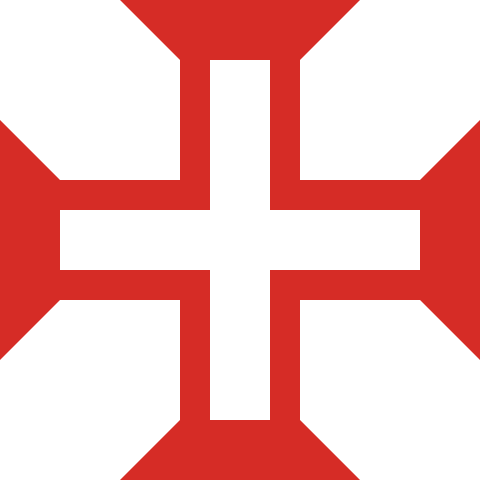
The cross of the Ordem de Cristo. The institution that paid for the voyages.
Two things the romantic accounts leave out.
First: “Henry the Navigator” was a nickname coined by nineteenth-century German historians; no one called him that in his lifetime. He rarely went to sea, and the voyages sailed from Lagos, not Sagres.
Second: Portuguese Atlantic voyaging pioneered the European trade in enslaved Africans from the 1440s, and the first organized European slave market is documented at Lagos — the same town the voyages sailed from. Knowing the period means knowing this too.
Why it matters
Here’s the through-line, and it’s worth keeping in your head for the whole TNIC:
Sort the era by institution, not by name.
Almost everything the TNIC exam will ask about the Discoveries fits into one of the four buckets.
The captain is a SHIPS question. The pope’s appointment of Henry is a MONEY question. The crossing of Cape Bojador and the volta do mar are KNOWLEDGE. The Casa da Índia and the Treaty of Tordesillas are ADMINISTRATION.
And one constitutional payoff: Article 7(4) of the 1976 Constitution commits the Portuguese Republic to privileged ties of friendship and cooperation with the Portuguese-speaking countries. The empire is gone. The language map it drew is constitutional.
Getting value from this? This is exactly how we cover all four exam pillars in our practice exams and study materials— real sources, no fluff. Click below to get on the waiting list to be the first to know when practice exams and study materials are available
Five things to remember
• The Discoveries were a built system, not a burst of heroism. MONEY (Order of Christ), SHIPS (caravela), KNOWLEDGE (volta do mar), ADMINISTRATION (Casa da Guiné → Casa da Índia).
• Four payoff dates. Ceuta 1415 (the foothold), Bojador 1434 (the psychological barrier breaks under Gil Eanes), Cape of Good Hope 1488 (Dias proves the oceans connect), Calicut 1498 (da Gama arrives India — departed Lisbon 8 July 1497, arrived 20 May 1498).
• The School of Sagres never existed. It was invented by 17th–18th century writers; “Henry the Navigator” was coined in the 19th. The expeditions sailed from Lagos.
• Tordesillas (1494) divided the non-European world between Portugal and Castile along a meridian. It is why Brazil — east of the line by accident of its eastward bulge — ended up Portuguese-speaking when Cabral landed in 1500.
• Portuguese voyaging pioneered the European trade in enslaved Africans from the 1440s. The first organized European slave market is documented at Lagos. Naming this plainly is part of knowing the period
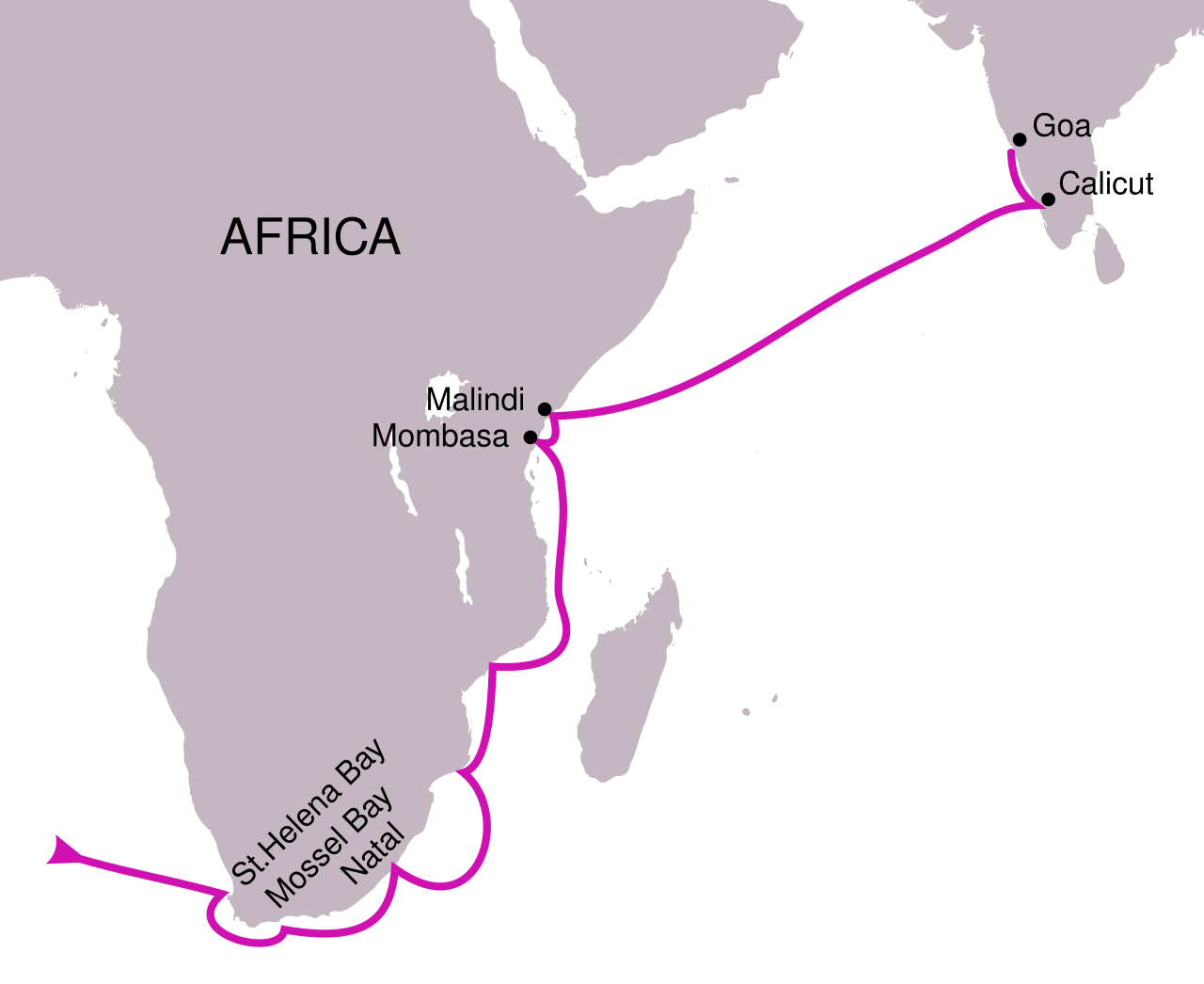
The route followed in Vasco da Gama's first voyage (1497–1499 CE)
Practice it
Three quick questions below. Full answer key for this and all our past issues questions is for subscribers-only — subscribe (it’s free!) at the bottom of this post to see how you did.
1. Which of these events of the Discoveries happened FIRST?
(a) Vasco da Gama reaches Calicut, India
(b) Gil Eanes rounds Cape Bojador
(c) The capture of Ceuta
(d) Bartolomeu Dias rounds the Cape of Good Hope
2. Which institution financed the early Atlantic voyages?
(a) The royal treasury
(b) The Order of Christ (Order of Tomar)
(c) The Casa da Índia
(d) The Templars of Tomar
3. What is the volta do mar?
(a) A type of Portuguese map
(b) A sailing technique — leaving the African coast for the open Atlantic to catch westerlies home
(c) The annual royal review of fleets
(d) The 1494 treaty dividing the Atlantic
How do you think you did without going up in this issue to find the answers? Want the answer key for all the questions in our issues? Click below to get them, it’s free.
The Portugal Civics Issue is a free weekly guide to Portugal’s TNIC citizenship exam. Next Sunday: Issue 08 — The Iberian Union (1580–1640) and the Restoration.
The work continues. — Chris, Aspiring Lusitano
Sources and Verifications
• Conquest of Ceuta (21 August 1415): Arquivo Nacional Torre do Tombo — virtual exhibition “Conquista de Ceuta” [antt.dglab.gov.pt/exposicoes-virtuais-2/conquista-de-ceuta/]; primary source — Gomes Eanes de Zurara, Crónica da Tomada de Ceuta, Biblioteca Nacional de Portugal digital ms. [purl.pt/24129]. Zurara was guarda-mor of the Torre do Tombo and interviewed Infante D. Henrique directly; secondary — “1415 — A Conquista de Ceuta,” Revista Militar [revistamilitar.pt/artigo/1053]. [Confirmed 2026-06-27 against ANTT: 21 August 1415, expedition led by King João I with Infante D. Henrique and his brothers.]
• Order of Christ — Henry appointed administrator-general (25 May 1420): en.wikipedia.org/wiki/Prince_Henry_the_Navigator;
• The caravela — lateen rig, shallow draft, ability to sail against the wind: historyskills.com — The caravel; en.wikipedia.org/wiki/Portuguese_maritime_exploration. Standard maritime history.
• Volta do mar — the open-ocean return technique: Volta do mar - Wikipedia
• Gil Eanes past Cape Bojador (1434; commissioned 1433): britannica.com/biography/Gil-Eanes; encyclopedia.com — Gil Eannes. Pre-publication: distinguish 1433 commission from 1434 voyage in body. The “Sea of Darkness” / “Green Sea of Darkness” framing is documented in 14th–15th c. European sailor accounts.
• Casa da Guiné (c. 1443, Lagos) → Casa da Índia (c. 1500); absorbed Casa da Guiné by 1503; ran until 1833: en.wikipedia.org/wiki/Casa_da_Índia; en.wikipedia.org/wiki/Casa_da_Guiné; britannica.com/money/House-of-India. Pre-publication verify: founding date is given as “c. 1500–1503” across sources — use “c. 1500” in body or pin to a single academic citation.
• Bartolomeu Dias rounds the Cape of Good Hope (1488): Bartolomeu Dias - Life, Legacy & Expeditions | HISTORY
• Treaty of Tordesillas (signed 7 June 1494): Castilian ratification copy held at Arquivo Nacional Torre do Tombo, Gaveta 17, maço 2, n.º 24 — Digitarq direct catalog entry [digitarq.arquivos.pt/documentDetails/edab0db849294873911a6abccdf58199]; UNESCO Memory of the World inscription (2007, joint Portugal–Spain candidacy) [unesco.org/en/memory-world/lac/tordesillas-treaty-1494]. The Portuguese ratification copy is held at the Archivo General de Indias, Seville. T
• Vasco da Gama: departed Lisbon 8 July 1497; reached Calicut 20 May 1498: britannica.com/biography/Vasco-da-Gama; en.wikipedia.org/wiki/Vasco_da_Gama. [Confirmed 2026-06-26: both dates exact in Britannica.]
• Pedro Álvares Cabral, Pedro Alvares Cabral, the first person in History to have been on four continents, on his voyage of the year 1500
• The School of Sagres myth — 17th–18th c. literary invention: Peter Russell, Prince Henry ‘the Navigator’ (Yale, 2000); en.wikipedia.org/wiki/Sagres_school. The myth was constructed mainly by Samuel Purchas (17th c.) and the Abbé Prévost (18th c.); the nickname “Henry the Navigator” was coined by 19th-c. German historians Heinrich Schäfer and Gustave de Veer. The early expeditions sailed from Lagos, not Sagres.
• Ming treasure voyages (Zheng He, 1405–1433) and the Haijin sea-ban: en.wikipedia.org/wiki/Ming_treasure_voyages; en.wikipedia.org/wiki/Haijin; en.wikipedia.org/wiki/Age_of_Discovery.
• Portuguese pioneering of the European trade in enslaved Africans (1440s, Lagos): Portugal Initiates African Slave Trade to Europe | Caribbean & Co.
•Article 7, Constitution of the Portuguese Republic — special ties with Portuguese-language countries: dre.pt — Constituição da República Portuguesa
Images
• The route of Vasco da Gama’s first voyage, 1497–98. Lisbon to Calicut in just over ten months. License/citation: Wikimedia Commons, CC-BY-SA. Source Source (Wikimedia Commons): https://commons.wikimedia.org/wiki/File:Gama_route_1.svg

• The cruz de Cristo / Order of Christ insignia, The red cross of the Order of Christ — the financing badge that appeared on the sails. Lets the reader see the institution in one symbol. License/citation: Wikimedia Commons, public domain.
Source (Wikimedia Commons): commons.wikimedia.org/wiki/File:Cruz_da_Ordem_de_Cristo.svg.
